Brook T. Smith Clemson Applied Science Lab (“The CASL”) has a very simple mission…
“Carry out the vision of the head football coach by providing confidence to student-athletes that their physical and technical development is constantly advancing.”
Director of Applied Science Dr. Alex Bina has done everything in his power to ensure that those words ring true and Tiger student-athletes are given every possible opportunity to both improve performance and physically recover, using any and all modern technologies available.
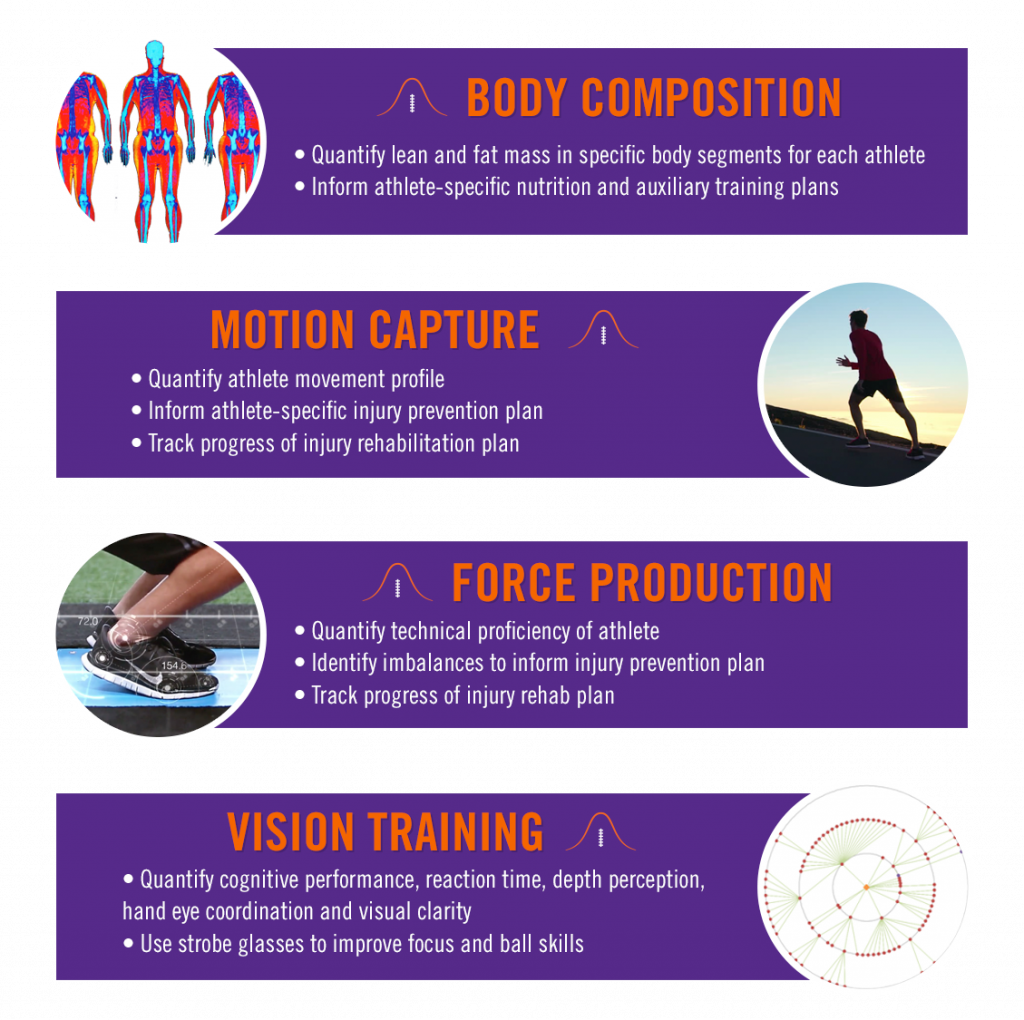
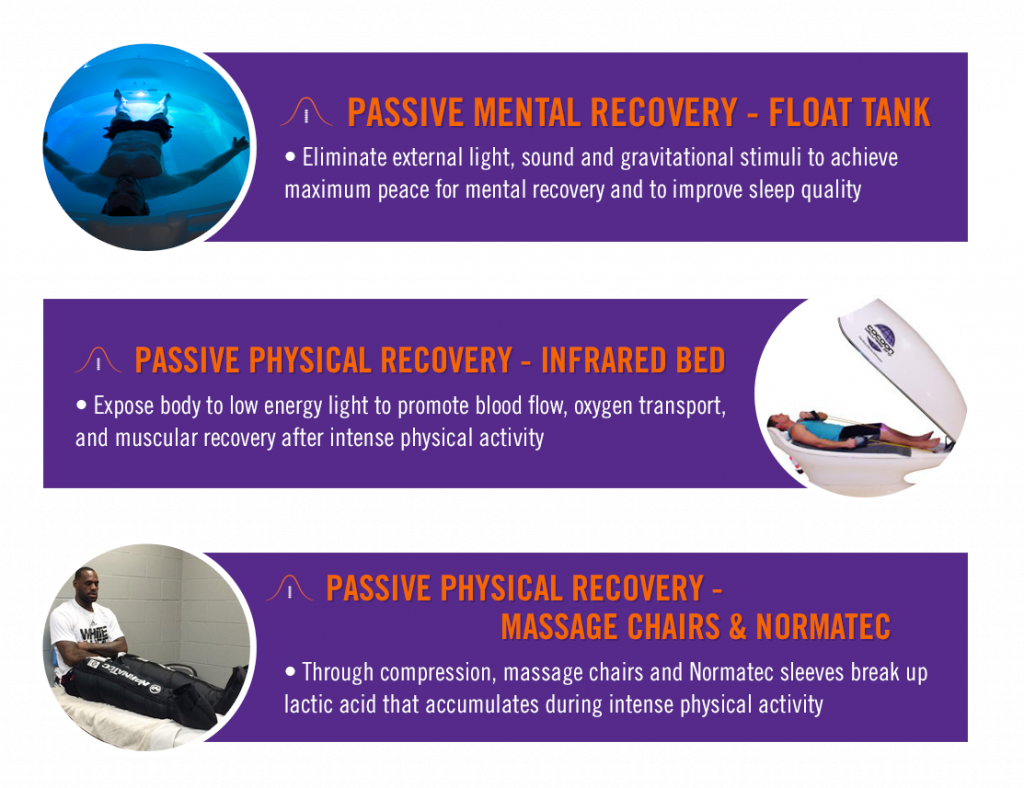
The two key focuses of “The CASL” are maximizing performance and expediting recovery.
The ultimate goal is quantifying human performance. Once the body and its abilities are put into numerical terms, it becomes considerably easier to determine what needs to be improved and the best possible route to enhance it.
Throughout the yearly training cycle, athletes are evaluated using technologies that leverage motion capture, force plates, sensory station, augmented reality, force transducers and GPS sensors in order to quantify athletic development.
Through this process, an athlete’s body composition, movement efficiency, vertical jump performance, cognitive reasoning skills, specific muscle strength, joint range of motion and on-field speed become clear to coach and athlete alike. By building a database of the “Clemson Effect” on athlete development and performance, the Clemson football staff can continue to build championship squads for future generations of Tiger players.
Not only does “The CASL” provide coaches and student-athletes with quantitative data with which they can analyze performance, it also is a key resource for student-athletes to use during the recovery process and injury risk mitigation protocols. Bina stressed that quick and healthy recovery is the priority of the staff at “The CASL.”
The path to success in recovery is a two-step process. The first is communication and collaboration between the student-athlete and his strength & conditioning coach, nutrition and sports medicine experts and his sports psychologist. The second is using the established baseline scores of the student- athlete as targets for return-to-play protocols and as a foundation for injuryprevention training.
In 2022, through a collaborative effort with the sports medicine staff, “The CASL” launched an injury-risk-mitigation protocol that leverages data analysis to inform athlete-specific interventions. After each training cycle (winter, spring, summer), the entire roster is evaluated for strength and mobility deficiencies or imbalances. These deficiencies inspire tune-up exercises carried out by the sports medicine staff to attack issues before they become long-term injuries.
The injury-risk-mitigation program carried out in “The CASL” was made possible through a cornerstone gift donated by Clemson alum and former Student Athletic Trainer Brook T. Smith (‘89) to ensure that Clemson student-athletes can benefit from leading innovations occurring in human performance development.
Bina has always been interested in bioengineering, which is the degree he earned from Penn State. Bina, who received his Ph.D. from Clemson, is implementing a simple plan, which is to “learn how the body works as a machine and put students in a position to manipulate that machine to improve recovery and performance.”
As far as long-term and overarching goals and aspirations for “The CASL,” Bina offered the following. “When we talk about, ‘Best is the Standard,’ that means in all ways possible. This is just another piece of that puzzle.”